

France's largest employer with nearly 1.3 million businesses*, half of them working in the building sector, the trades have successfully reinvented themselves in a sometimes tense economic climate. To endure, construction tradespeople have often staked their future on excellence: a means of differentiation that nevertheless demands continuous upskilling — which brands have a duty to support.
The relationship with brands is the number one criterion when selecting a product.
To answer the question “Who is the construction tradesperson in 2019?”, we necessarily have to look at the specific nature of their work. Quality of workmanship, availability, meeting deadlines and budgets, transparency, product traceability: perhaps more than anywhere else, meeting client expectations is a genuine daily challenge! Faced with growing demand, fuelled by numerous factors (word of mouth, matchmaking platforms, government renovation grants, intermediation and so on), the tradesperson is being transformed from “technician” into “entrepreneur”.
The long-term survival of their business will therefore inevitably depend on better management of their company. When you consider that the vast majority of these businesses have between 1 and 5 employees, one can legitimately wonder how they manage to juggle running the order book, training, keeping up with technical and regulatory developments, customer and supplier relations, business administration... and actually doing the work! To anchor their growth over the long term, the construction tradesperson may need to opt for efficiency (i.e. the combination of productivity and profitability). Conversely, some have chosen to work on a volume-based model: a large number of more or less “standardised” jobs. In every one of these many configurations, brands have a fundamental role to play.
10 January 2022

Geoffrey S.
6minWhen you see that the “relationship with the supplier” (advice, service, after-sales support, training) is the tradesperson's number one criterion when selecting a product (ahead of technical characteristics, price or availability), it is fair to reconsider the role of brands! Too often focused on a price/technology pairing, adopting the posture of a “distant supplier”, shouldn't the manufacturer be evolving its discourse towards greater closeness and rapport? Rest assured, price and product performance remain essential factors and there is obviously no question of leaving them out of the conversation — but let's not forget to highlight what most often makes the difference: support.
Building bonds for long-term engagement
“What do we mean by relationship marketing? It is essentially about shifting a brand's value proposition from the traditional product/price pairing towards a strong service-led approach that serves the customer experience as a whole. Relationship marketing has a single objective: building bonds to build brand preference. This means developing high value-added media and content that genuinely serve the tradesperson's daily work and become true working tools. Unlike traditional sales initiatives aimed at hitting short-term revenue targets (essential though they are!), relationship marketing aims to build loyalty, engage and converse with the various audiences.”
Paul Ricateau, managing partner at Convergence
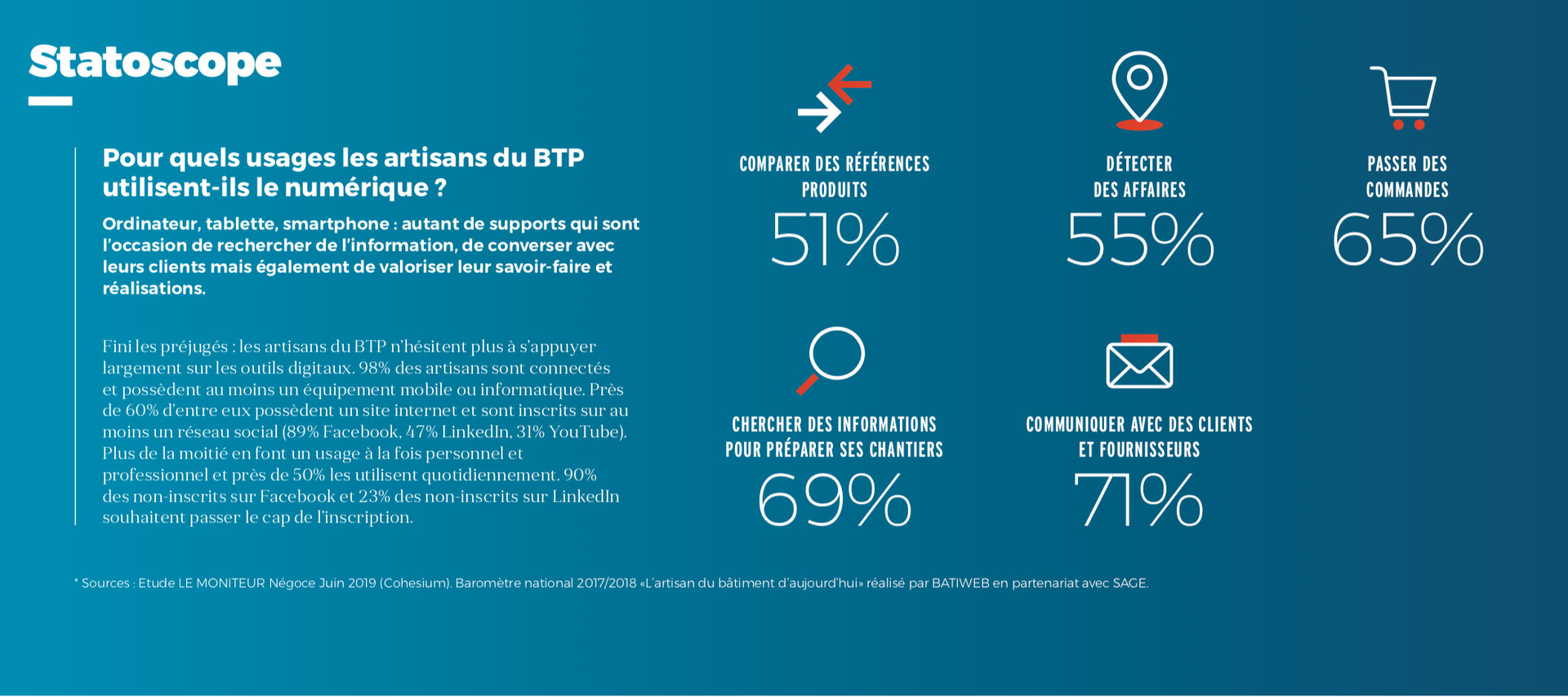
How does my brand help showcase the tradesperson's know-how? How does it contribute to developing their skills? How does it deliver better productivity for them day to day? “Products” are part of a whole — a subtle equation that goes by the name of “customer experience”. To achieve this, the brand needs to shift its focus and devise new formats, content and tools that will nurture and enrich the customer relationship beyond the usual technical discourse. The manufacturer, in turn, moves from industrial producer to “service provider”. Its first priority must be to support the essential upskilling of construction tradespeople.