

As the pressure ratchets up on brands' CSR commitments, the hunt for greenwashing is on ! Far from escaping it, the construction sector is at the heart of the ecological transition, and audiences' expectations around sustainability keep growing. Indeed, 82% of European consumers want to be better informed about the sustainability of the products they might buy*. The housing sector is under close watch !
Since the start of the year, communicating the environmental performance of your solutions accurately and in line with the new regulations has become a crucial issue for brands. So what does the new regulation on environmental claims say, and how does it influence communication strategies ? What best practices should you adopt to avoid the pitfalls of greenwashing ? Our team sheds some light !
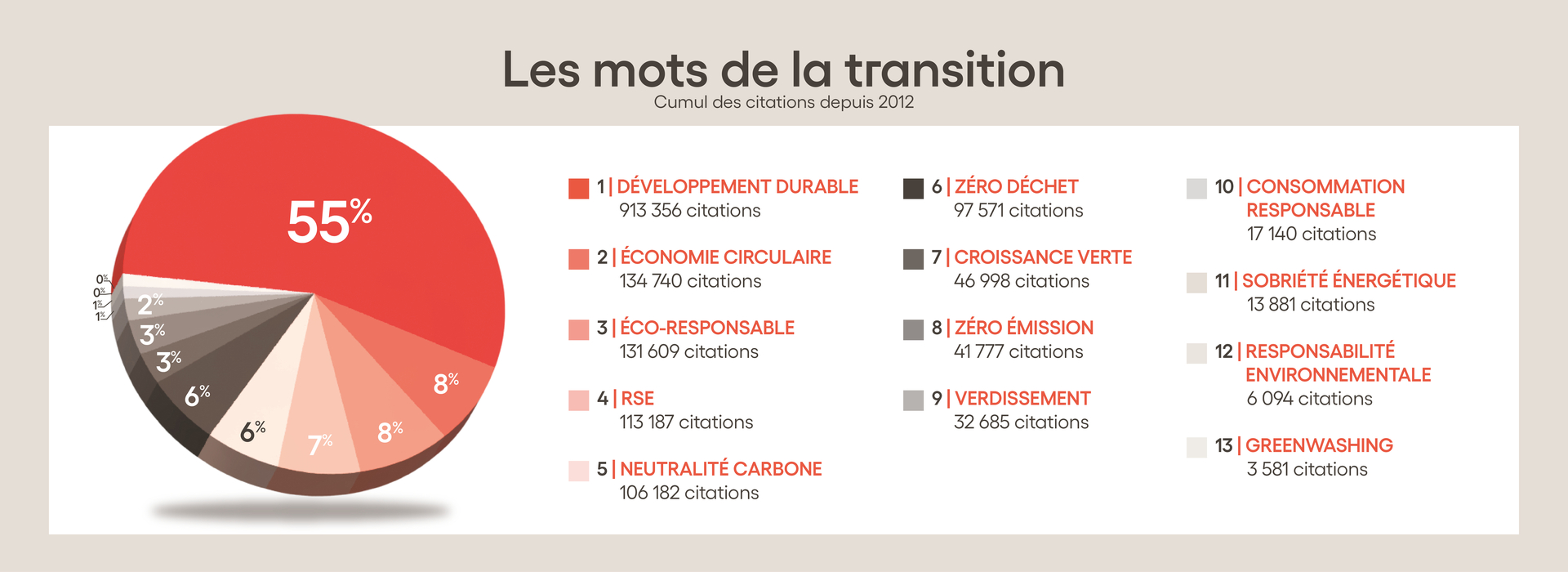
Greenwashing is not always explicit and can take highly varied and subtle forms: using words or images to suggest a product is falsely "green", discrediting a sustainable practice to showcase a less environmentally friendly one, promoting a polluting activity today on the pretext that it will be carbon neutral in X years' time, or dressing up communications with a few trees and forests : the possibilities are endless!
But that was before !
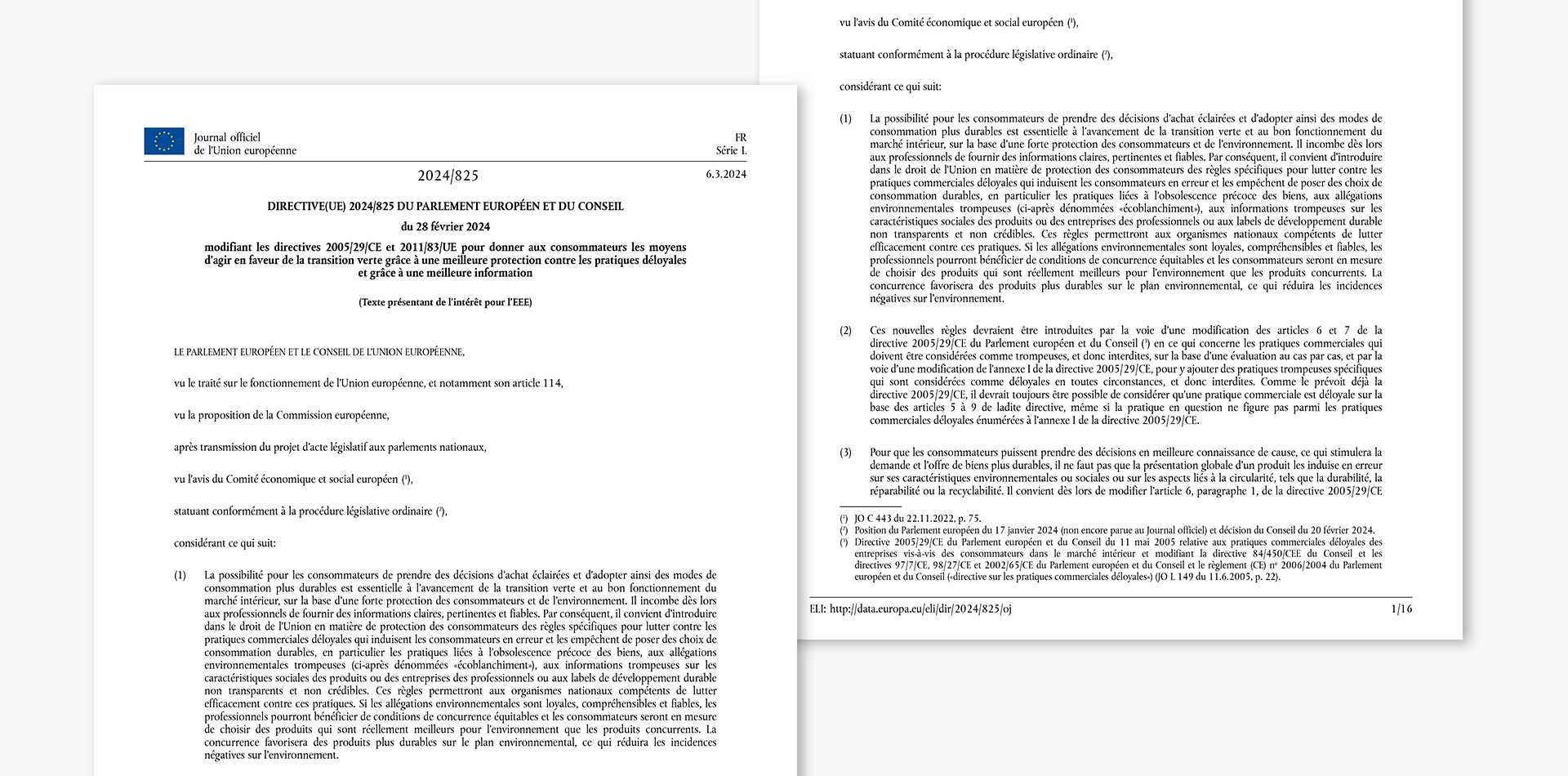
The European directive of 28 February 2024 now imposes strict rules on the use of environmental claims. "Generic" terms deemed misleading, such as "green product", "sustainable" or "100% natural", are now banned unless backed by solid, specific evidence.
Annex I of Directive 2005/29/EC has notably been amended to prohibit generic environmental claims that are not supported by recognised, provable environmental performance. Companies must now provide verifiable evidence for all of their ecological claims.
What are the consequences for the marketing and communication strategies of brands in the construction and housing sector ?
Whether it is a matter of highlighting the ecological benefits of a new product or a broader commitment initiative, every communication activity must be carefully prepared in the light of the new regulation. Here are a few sound tips for communicating your commitments in full compliance !
Ban "generic" terms
Terms such as "green", "environmentally friendly", "eco-virtuous" or "recycled / recyclable" should be avoided because they are too generic and can be perceived as greenwashing. Instead, opt for clear, specific vocabulary supported by concrete, verified evidence.
For example, a claim such as "environmentally friendly packaging" is considered generic and is therefore now prohibited, whereas a specific statement such as "this packaging contains 95% recycled material on such-and-such production line" is permitted.
Demonstrate extreme precision and transparency in every message
Your advertising messages must faithfully reflect the environmental impact of your brand or products. Every claim must be proportionate to the actual action. For example, if your brand uses 10% recycled materials in a product, it must not imply that the entire product is recycled.
Likewise, if your environmental actions have limits or exceptions, they must be clearly stated. Is your product recyclable only under certain conditions or in certain regions ? Then the caveat must appear. Ultra-transparency and precision are the order of the day !
Provide proof of what you claim
To substantiate your claims, consider using concrete examples, verified by a third party where possible (environmental product declaration or EPD/FDES, emissions testing, etc.). To do so, call on recognised certification bodies who will validate your environmental claims and enable you to reassure consumers about the truth of your commitments.
"In-house labels" and "self-certifications" are over ! A certification such as an EPD/FDES verified by an accredited body is now indispensable for any communication about low-carbon products.

19 March 2024

Manon T.
7min- Avoid greenwashing symbols in your visual communications
In recent years, graphics featuring tree or plant motifs, evocations of the Earth and other "green logos" have flooded the construction market, to the point of becoming commonplace whenever a brand decides to communicate about its commitments or the environmental credentials of its solutions.
While it indirectly escapes the scope of the regulation, the use of visual elements evoking nature must not mislead as to the actual environmental properties of the product or your brand's actions.
To go further!
Consult the practical guide to environmental claims published by France's National Consumer Council (2023).
While the new regulations on environmental claims represent a sizeable challenge for your brand, they are above all an opportunity to strengthen your credibility. By adopting a rigorous, compliant approach, you will not only avoid penalties but also position your brand as a leader and a trusted partner. To support you in this endeavour, our teams can prove a real asset ! Shall we discuss it over a coffee ?
An environmental claim is a statement that promotes all or part of a product for its environmental characteristics. This claim may appear on the packaging, on the label or in the product's advertising.
*Source : https://ec.europa.eu/commission/presscorner/detail/fr/fs_22_2099