

More than a fashionable concept, CSR is at the heart of every strategy among construction industry manufacturers. The ambition: to transform the construction sector, which generates 23% of France's greenhouse gas emissions*, profoundly and sustainably.
While clients and specifiers now demand that brands commit and set themselves social and environmental targets (a sine qua non for specification), 86% of tradespeople remain sceptical and say that sustainability means more expensive products and services**.
So how do you enhance your brand image with evidence-led messaging that speaks to tradespeople, without slipping into greenwashing? This is where the agency comes in!
The only option left for a brand is to pull the CSR thread, once reserved for "corporate" communication, all the way through to its products and its customers.
More than an image issue, a positioning issue
To be described as "committed to sustainable construction", a brand can no longer confine itself to producing its annual corporate CSR report (even if that is a good first step!).
Since France's PACTE law came into force in 2019, all companies have been required to put a CSR policy in place or, at the very least, to enshrine their corporate purpose in their articles of association. The upside: they make commitments, set themselves targets and implement actions that they later showcase in their communication. The downside: what used to be a potential point of differentiation - an opportunity to create value and build brand preference - is now simply the new norm.
Ultimately, to reach professionals and bring them on board, the only option left for a brand is to pull the CSR thread - once reserved for "corporate" communication - all the way through to its products and its customers. In short: demystify CSR to make it concrete and useful in professionals' daily lives - starting with tradespeople!
But this challenge raises a new question: now that CSR is no longer just a matter of corporate image, how do you convince your audiences that your solutions are committed too? How do you make a manufacturer's environmental approach concrete and tangible in the (already very full) daily lives of professionals? That is the bet some brands have tried to win. And we are about to find out how in the rest of this article!
CSR communication: 3 brand scenarios
56% of French people believe companies should communicate their commitments right through to the point of sale**.
Saint-Gobain, Nicoll, Semin: many manufacturers have already taken the plunge. Here is a tour of the most popular scenarios for showing customers that "we do sustainable, responsible things"... right down to the products themselves!
The brand label
To bridge the gap between a very corporate CSR narrative and proof through action, some brands create their own label (or scheme) which they apply to their products. While the concept of self-labelling seems relevant for audiences who are well informed on the subject, or who have time to dig deeper, it makes for communication that is not very legible and less immediate for tradespeople.
In short: the intention is clear, but you have to dig further to discover what really lies behind it.
The responsible range
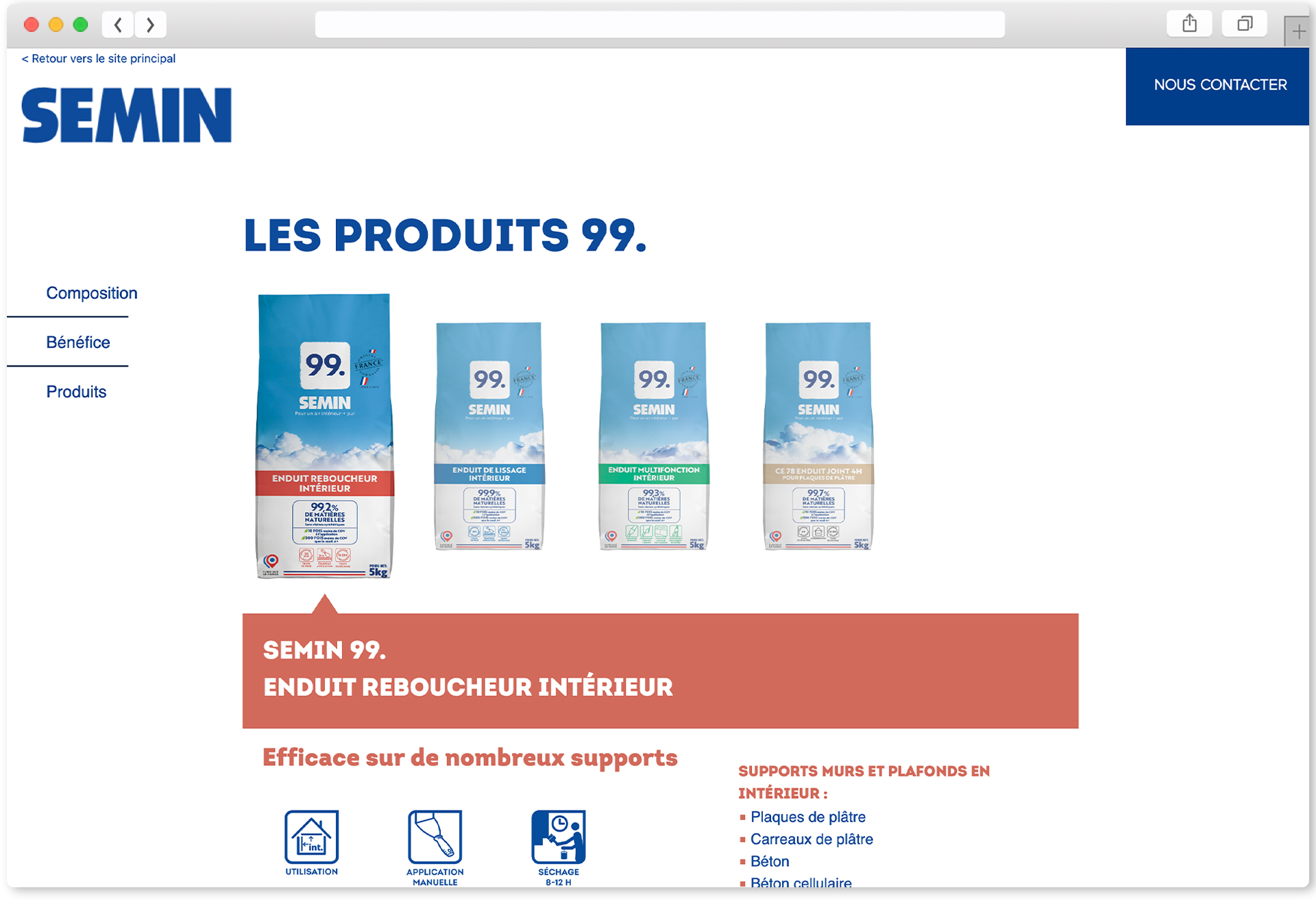
To respond to the sustainable marketing trend, other brands have chosen to give their audiences a very pragmatic and effective answer: they create a separate offering that brings together all their "committed" products and adopts the codes of "green" communication (nature, the colour green, cardboard effects, etc.)
A very legible, factual approach that is immediately understandable for tradespeople and builders' merchants today. One may nevertheless wonder where such an approach leads: as "responsible" becomes "the norm", can this model really hold up for years to come?
Creating a range dedicated to sustainable solutions is therefore a sound short-term approach, while remaining vigilant about the risk of greenwashing.
Certifications
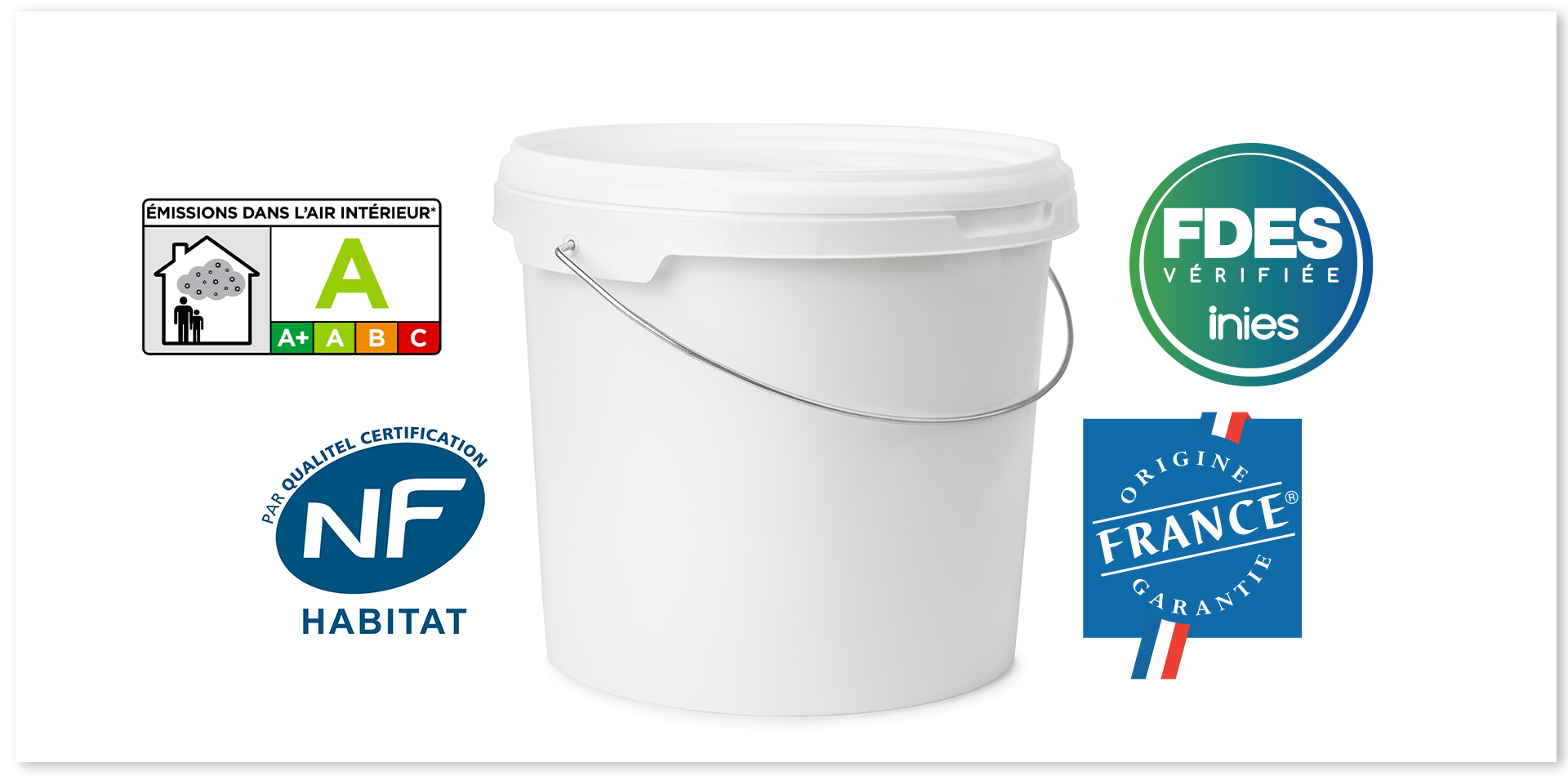
Studies have demonstrated consumers' interest in official certifications - logos and pictograms that reassure and help guide choices!
So brands use them (and sometimes overuse them) in their communication. They seize on every certificate available to them (NF, made in France, A+, FDES, ISO 50001, ...) to the point of creating a degree of confusion and a lack of clarity for their audiences.Conclusion: yes to certifications, but in moderation!
The verdict is clear: whatever the approach taken, it remains difficult for a brand to genuinely connect its CSR narrative (the ambition) to its products (the proof).
Good to know
To combat greenwashing, MEPs voted on Tuesday 12 March 2024 on draft legislation banning all environmental claims not backed up by facts. In the event of a breach, companies would face financial penalties. Find out more →
CSR that creates value for tradespeople? It is possible!
80% of tradespeople consider sustainability an "important" or "very important" issue, yet two thirds do not make it a priority in their professional activity**. "Committed" products are not a selection criterion for tradespeople, since they have no real motivation to make the effort to change their habits.
So at the agency, our objective is simple: find the best scenario for speaking to tradespeople who do not feel these subjects concern them.
The Convergence approach
- Bring clarity: at the agency, we are convinced that a brand must deliver the right information, simply and pragmatically, to reach professionals who are drowning in "sustainability" information. A CSR that steps out of annual reports and into their daily lives! An imperative all the more true given that taking this stance is proof that you are listening to your customers' needs and concerns.
- Lead by example: since the risk of greenwashing is never far away, favour real, concrete actions without over-promising. Your commitments are an integral part of your mission as an influential economic player: they can prove a genuine performance lever, provided you do not slip into communication that serves purely advertising ends, which would make you look like an opportunistic brand.
- Speak to all tradespeople: to rally professionals to your brand, make sure you bring as many as possible into a movement to "build sustainably together". Only through a collaborative, constructive approach will tradespeople feel that sustainability concerns them - and only then will you make it possible for them to act, without coercion.
If your brand manages to align its own sustainable construction goals with its products, your commitments will gain credibility, becoming a powerful source of influence. Is that precisely one of the objectives you have set yourself for 2024? You can count on the agency and its expertise in the construction trades to help you take action!